
How to Coordinate with Wedding Photographer for Seamless Coverage


Planning your Staffordshire wedding is about more than just choosing décor and menus. It is about crafting a celebration that genuinely reflects who you are as a couple and ensuring those moments are captured in a way that feels authentic to you. With recent wedding law reforms in England and Wales giving couples more power than ever to personalise their big day, knowing how to communicate your vision and priorities to your documentary-style photographer is the foundation of seamless, meaningful photography that brings your story to life.
Table of Contents
Quick Summary
Essential Insight | Explanation |
1. Define Your Wedding Vision | Understand your unique values and priorities to tailor your photography to reflect your relationship. |
2. Communicate Key Timings Clearly | Share a detailed timeline of events with your photographer to prevent missing important moments. |
3. Specify Photography Shot Preferences | Discuss particular shots and family combinations to ensure your photographer captures what matters most to you. |
4. Establish Clear Communication Protocols | Agree on a single point of contact and preferred communication methods to streamline interactions before and during your wedding. |
5. Review Final Plans Before the Wedding | Have a detailed meeting with your photographer to confirm timelines and shot lists to avoid misunderstandings on the day. |
Step 1: Establish your wedding vision and priorities
Before you talk to your photographer, you need to know what your wedding actually means to you. This isn’t about Pinterest boards or trending aesthetics. It’s about understanding your own values, your relationship story, and how you want to feel on your wedding day. Getting this right from the start transforms your photography from generic coverage into something deeply personal that captures who you really are as a couple.
Start by asking yourselves some honest questions about what matters most. What’s the tone you want to set? Are you planning an intimate garden ceremony with close family, or a grand celebration with 150 guests? Do you want your photographer blending into the background, catching candid moments as they unfold naturally? Or do you prefer more structured portraits and group photos? Think about the moments that make your hearts race. Is it seeing each other at the altar? The first dance? Laughter during the reception? When you identify these priorities, your photographer knows exactly where to focus their lens and attention. Modern wedding law reforms have given couples greater freedom to personalise their wedding day, meaning your vision might look entirely different from someone else’s, and that’s precisely the point.
Next, consider your wedding’s practical elements alongside your emotional priorities. Think about your venue and how the light will behave throughout the day. Think about your guest list and whether you want candid family moments or more posed documentation. Consider your timeline too. A 3-hour reception differs vastly from an 8-hour celebration. These details matter because your photographer needs to understand the rhythm of your day to capture it effectively. When you’re clear on these priorities, you’re not giving your photographer restrictions. You’re giving them direction. You’re saying, “Here’s what we care about. Here’s how we want to feel. Here’s what our wedding looks like.” This clarity becomes the foundation for seamless coverage where your photographer anticipates moments rather than just reacting to them.
Effective planning starts with identifying key priorities and aligning them with your overall vision for the day. Write down your top three to five priorities. Are they emotional moments, specific family combinations, venue details, or the overall atmosphere? Be honest about what you genuinely want, not what you think you should want. A couple prioritising intimate, documentary-style coverage has entirely different coordination needs than a couple wanting traditional family portraits and detailed reception shots. Neither approach is wrong, but your photographer absolutely needs to know which one reflects your reality.
To help clarify your wedding vision, here is a summary of core priorities couples often consider:
Priority Area | Impact on Photography | Example Considerations |
Emotional Moments | Focuses on genuine reactions | First look, family embrace |
Venue Details | Highlights unique locations | Garden arch, chandelier, décor |
Group Shots | Ensures key relationships | Immediate family, friend groups |
Atmosphere & Style | Shapes overall photo style | Relaxed vibe, formal ambience |
Timeline & Logistics | Dictates photographer’s plan | 3-hour vs 8-hour reception |
Pro tip: Create a shared vision document or mood board showing your photographer examples of moments, styles, and emotions you want captured, but more importantly, write a few sentences explaining why these images resonate with you so they understand your core priorities, not just your aesthetic preferences.
Step 2: Share essential details and timelines
Your photographer cannot do their job well if they’re working blind. They need to understand not just what your wedding looks like, but when everything happens and how long each part lasts. This isn’t about micromanaging their work. It’s about giving them the information required to position themselves correctly, anticipate transitions, and ensure no critical moment gets missed because they were in the wrong place at the wrong time.

Start with the big picture timeline. When does your photographer arrive? What time does the ceremony begin, and how long will it last? When are family photos scheduled? What’s the reception flow from first dance through to your send-off? These broad strokes matter enormously. A photographer who knows your ceremony runs 20 minutes can position themselves strategically. One who doesn’t might miss the vows entirely. Share your wedding ceremony schedule and key timings clearly so there’s no ambiguity. If you have a civil partnership or religious ceremony with specific requirements, your photographer needs those details too. Different ceremony types have different shooting restrictions and opportunities, and your photographer should know what to expect.
Beyond the ceremony timeline, communicate the practical details that affect coverage. Which venue doors open into the ceremony space? Where’s the best natural light for family photos? Are there rooms for getting ready photos, and when are people available? Will your guests be arriving throughout the day or all at once? Is there a receiving line or will you be mingling naturally? What about your reception layout? Is the dance floor visible from the bar, or will your photographer need to move between spaces? These specifics transform your photographer from someone hoping to capture moments into someone who knows exactly where to be. Provide full venue details and the day’s schedule in writing so there’s a record both of you can reference.
Organise this information clearly. Create a simple written timeline that covers every major moment of your day, and share it at least two to three weeks before your wedding. Include arrival times, ceremony start, reception locations, meal times, key moments you want captured, and rough durations. Include contact numbers for your venue coordinator or wedding planner if you have one. Add any special considerations: a surprise performance, a first look location, specific family dynamics, or traditions you’re incorporating. The more your photographer understands the flow, the better they can anticipate moments rather than scrambling to catch them.
When your photographer understands your complete timeline, they stop reacting to your day and start interpreting it, positioning themselves for moments before they happen rather than after.
Don’t assume your photographer knows how your ceremony works or your reception will unfold. What feels obvious to you as the couple might be completely foreign to your photographer. A photographer who’s shot dozens of civil ceremonies might have never seen a traditional church service with specific readings and rituals. Someone who shoots formal receptions with structured timelines might not understand your relaxed afternoon tea-style celebration. Share everything. Include the unexpected moments too. If you’re surprising your partner with a video message from family abroad, your photographer needs to know so they can capture their genuine reaction.
Pro tip: Send your photographer a detailed timeline at least two weeks before the wedding, and have a brief call or video chat 7-10 days before to walk through the day together, answering any questions they raise and confirming they understand the rhythm and priorities you’ve established.
Step 3: Discuss specific shot preferences and concerns
Now comes the conversation that transforms your photographer from a vendor into a true partner in capturing your day. This is where you talk about what you actually want to see in your final images. Not vague generalities, but specific shots, specific moments, specific people, and specific concerns. This conversation prevents assumptions and ensures your photographer understands exactly what success looks like for you.
Start by discussing the types of shots that matter most to you. Do you want candid, unposed moments where your photographer melts into the background, or are you comfortable with directed portraits and posed family groups? Many couples in Staffordshire choosing documentary-style photography want a blend of both, but the balance matters enormously. A photographer preparing for primarily candid coverage positions themselves differently than one expected to orchestrate family photos. Talk about specific moments too. Which family combinations do you definitely want photographed? Your immediate family? Extended relatives? Close friends? Some couples want their photographer capturing every embrace with family members. Others prefer to keep the focus tighter on the couple and their closest circle. Be explicit about this because your photographer cannot read minds, and there’s nothing worse than discovering after your wedding that important family moments went uncaptured simply because nobody mentioned them.
Here is a comparison of popular wedding photography approaches:
Approach | Main Characteristics | Best For Couples Who |
Documentary Style | Unposed, candid story-telling | Value natural moments, emotion |
Traditional Portraits | Directed, classic compositions | Want formal family group photos |
Fine Art | Artistic edits, stylised detail | Appreciate visual drama, creativity |
Mixed Approach | Blend of candid and posed shots | Desire flexibility and variety |
Discuss any concerns or sensitivities openly. Are there people who don’t want their photographs taken? Are there moments during your ceremony where photography might be restricted? Will you have elderly guests who fatigue easily during photo sessions? Is there a particular angle or lighting situation that bothers you? Professional photographers understand that discussing shot preferences and special requests upfront prevents misunderstandings and ensures they can plan accordingly. If your venue has restricted photography areas, if you have specific cultural or religious requirements, if you’re self-conscious about certain angles, tell your photographer. These aren’t limitations to resent. They’re details that help your photographer deliver exactly what you want.
Talk about your style preferences concretely. Describe the look and feel you’re drawn to. Are you drawn to bright, airy images with soft light? Moody, atmospheric shots? Natural colour or edited tones? Instead of saying “we want documentary style” (which means different things to different people), describe what that actually means for you. Show your photographer examples of images that resonate, and more importantly, explain why. Is it the composition? The emotion captured? The way light falls? The spontaneity? Your photographer needs to understand your aesthetic language, not just see random images you like.
Address practical concerns too. Will you need images suitable for social media alongside those perfect for large prints? Do you want black and white shots, colour only, or both? Are there specific locations where you want photos taken? Will there be lighting challenges your photographer should know about in advance? Are you concerned about your photographer being intrusive during certain moments? Clear discussions about photography arrangements and any restrictions in your venue help your photographer prepare technically and logistically.
Your photographer isn’t a mind reader. What feels obvious to you often isn’t obvious to them, so specificity isn’t demanding—it’s professional and essential.
Create a simple shot list together. This doesn’t need to be exhaustive, but it should cover your priorities. Essential family combinations, important friend groups, venue details you want captured, first look locations if you’re doing one. Walk through this list with your photographer during a call or video chat rather than just emailing it. Listen to their feedback too. They’ve shot dozens of weddings and will spot potential challenges you haven’t considered. They might suggest additional shots you hadn’t thought of, or flag practical issues with what you’re hoping for. This is collaborative problem-solving, not you dictating and them obeying.
Don’t assume your photographer automatically knows how to capture your particular relationship dynamics or your personalities. If you’re both introverted and self-conscious, your photographer needs to know so they can approach you gently during formal photos. If you’re naturally exuberant and want lots of candid laughter captured, say that. If you have younger children you want prominently featured, be clear. The more your photographer understands about who you are and what matters to you, the better they can anticipate moments and frame them in ways that feel authentic rather than staged.
Pro tip: Prepare a short list of three to five “must-have” shots before your conversation with your photographer, then discuss any concerns or sensitivities, and finally ask them to suggest additional shots based on your venue and style—this creates a collaborative shot list that reflects both your priorities and their professional expertise.
Step 4: Agree on communication methods and points of contact
Misunderstandings happen when communication channels are unclear. Your photographer doesn’t know whether to text you with questions or email them. You don’t know if they’re checking messages the night before your wedding or ignoring their phone to stay present. Your venue coordinator is trying to reach someone but doesn’t know who, when, or how. Before your wedding day arrives, establish crystal-clear communication protocols so everyone knows exactly how to reach each other and when responses can be expected.
Start by identifying your primary point of contact. Is it you, your partner, or are you designating your best man, maid of honour, or wedding planner? Your photographer needs one clear person to communicate with on the day itself. This person should be someone calm, organised, and reachable throughout your wedding. You don’t want your photographer trying to reach you simultaneously through three different people because someone’s phone died or they didn’t check messages. Agree on the preferred communication method for different scenarios. Email works wonderfully for detailed information shared weeks before your wedding. Text or WhatsApp is perfect for quick day-of questions or urgent updates. Phone calls are best for complex conversations that benefit from real dialogue. Different communication channels serve different purposes, and selecting appropriate communication methods ensures clarity and accessibility for everyone involved.
Share specific contact details and set clear expectations about response times. What’s your photographer’s mobile number? Do they prefer WhatsApp or text? What’s the best email to use? When does your photographer typically check messages? Are they available for calls, or do they prefer written communication? Similarly, share your contact details and let your photographer know your availability. If you’re in bridal prep on the morning of your wedding and unreachable from 9 until 11 am, say so. If your venue coordinator should handle any logistics questions, provide that person’s details too. The goal isn’t to create rigid rules. It’s to prevent the panic of not knowing how to reach someone when you need to.
Establish a communication timeline so everyone knows when to expect contact. Will your photographer reach out a week before to confirm arrival time? Will you send a final recap email three days before? Should the photographer contact your point of contact on the morning of your wedding to confirm they’re on route? A structured communication plan outlines purpose, frequency, and methods of updates, ensuring nobody is left wondering whether they’ve been forgotten. Some photographers like to have a brief call with couples a few days before the wedding to walk through the day one final time. Others prefer a detailed email and don’t need another conversation. Discuss what works for both of you.
Talk about emergency protocols. What happens if your photographer has a last-minute illness and needs to reschedule? What happens if someone in your family has an emergency and your timeline shifts? How will you notify your photographer of changes? Agree that critical updates get communicated promptly by phone or text, not buried in an email they might not see immediately. Create a simple contact sheet that includes everyone’s details: your names and mobile numbers, your point of contact, your photographer’s details, your venue coordinator’s details, and your best man or maid of honour’s information. Share this with your photographer two weeks before your wedding.
Clear communication channels prevent panic on the day. When everyone knows how to reach everyone else, problems get solved quickly instead of spiralling into stress.
Discuss boundaries around communication too. Your photographer probably doesn’t want messages at midnight the night before your wedding. You probably don’t want your photographer ringing you constantly on the day itself if they’re just confirming details. Agree on reasonable expectations. Emergency communication is always acceptable. Routine questions can wait for specified times. This protects both of you and keeps everyone’s focus where it should be on your wedding day.
Consider establishing a WhatsApp group or similar chat with your photographer, venue coordinator, and anyone else critical to your day’s logistics. This creates a single thread where everyone can see information, preventing the chaos of the same question being asked three times through different channels. One clear space for coordination keeps everyone on the same page.
Finally, confirm that your photographer has all backup contact information. What if your primary point of contact’s phone dies? Have a secondary contact number. What if your photographer’s phone stops working? Do they have an email or alternative number? Redundancy might seem excessive, but it’s the difference between a small hiccup and a genuine crisis on your wedding day.
Pro tip: Create a simple one-page contact sheet with everyone’s details and preferred communication methods, then share it with your photographer, venue coordinator, and wedding party at least two weeks before your wedding so everyone can reference it without confusion.
Step 5: Review and confirm the final photography plan
You’ve had conversations. You’ve shared details. You’ve discussed preferences and concerns. Now comes the critical step before your wedding day arrives: sitting down together with your photographer to review everything, confirm nothing’s been missed, and ensure you’re both genuinely aligned on what’s about to happen. This isn’t a formality. This is your final safety net to catch any misunderstandings or gaps before it’s too late to fix them.
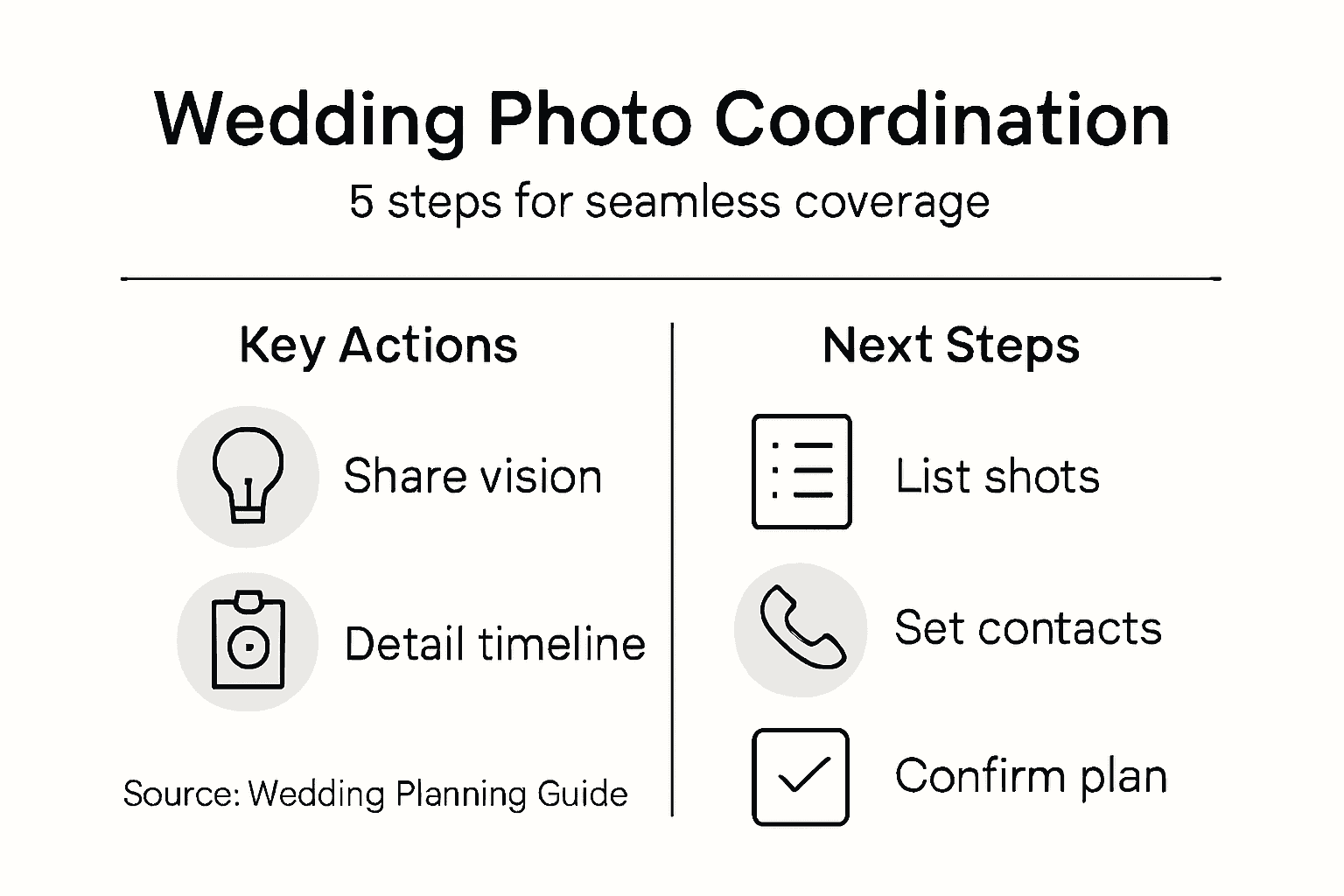
Schedule a final planning call or meeting roughly one week before your wedding. This should be a proper conversation, not a rushed email exchange. The purpose is to walk through your entire day from start to finish, ensuring your photographer can visualise exactly how your wedding will unfold. Review your timeline together. Talk through each major moment: getting ready, the ceremony, family photos, reception. Ask your photographer if they see any potential challenges with timing, lighting, or logistics. Do they have questions about your venue layout? Are there moments on your shot list that might conflict with each other timing-wise? A photographer with experience will spot issues you haven’t considered. This is the moment to address them collaboratively.
Walk through your complete shot list together. Review the family combinations you want captured. Discuss the specific moments that matter most. Talk about the candid moments you’re hoping for and the posed portraits you need. Confirm which family members or friends have specific photography requests. This isn’t about memorising every detail. It’s about your photographer knowing your priorities so clearly that they can make split-second decisions during your day aligned with what matters to you. When your photographer understands your shot list thoroughly, they can anticipate moments and position themselves accordingly rather than constantly reacting. Reviewing and confirming shot lists and schedules ensures both photographer and client are aligned on deliverables and expectations before your wedding arrives.
Talk through technical and practical considerations specific to your venue. What’s the lighting situation in your ceremony space? Is it naturally lit or artificially lit? Are there windows and where will the light come from at different times? What about the reception space for dancing? Will your photographer need to move between multiple locations, and how much time do they have between each space? Are there any restricted photography areas? Will your photographer need access to certain rooms during your day? The more your photographer understands about your venue’s practical realities, the better they can prepare technically. They might need to bring additional lighting equipment. They might need to scout the venue beforehand. They might need to understand where power sources are or where the best vantage points exist. These aren’t minor details. They’re the difference between stunning images and mediocre ones.
Discuss your photographer’s preparations and any concerns they’ve raised. Have they visited your venue? Do they need to do a site visit? Are there technical aspects of your day they want to confirm? Have they flagged any potential challenges? Listen to their professional insights. Your photographer has shot dozens of weddings. They’ll spot issues like “the ceremony space has only one entrance, so I’ll need to position myself carefully” or “the reception venue’s lighting is quite dim, so I might need to use different equipment than we initially discussed.” These conversations allow you to problem-solve together rather than discovering issues during your wedding.
This final review transforms nervous “I hope everything goes right” into confident “we’ve prepared for this together and we know it will work.”
Confirm all the practical logistics one final time. What time should your photographer arrive? Where should they go when they arrive? Who will meet them? Is there parking? Will they need access to a getting-ready room? Where should they leave their bags and equipment? What’s the contact number for your point of contact on the day? Review your emergency protocols. What happens if your photographer gets stuck in traffic? What’s your backup plan if they fall ill? Having these conversations in advance prevents panic on the day.
Alignments across your entire wedding team matter too. Does your venue coordinator know your photographer will be moving between spaces? Have you confirmed with your caterer that they understand your photographer will need access to capture certain moments? If you’re having a videographer, has your photographer coordinated with them so they’re not constantly in each other’s shots? If you’re having a live streamer, do all three understand how they’ll work around each other? Seamless coverage requires coordination beyond just you and your photographer.
Before you finish this call, review the deliverables and timeline for receiving your images. When will you receive proofs or previews? How many edited images will you receive? What’s the timeline for final delivery? Are prints or albums included? Do you want digital files? Understanding what to expect after your wedding prevents disappointment later.
Finally, confirm the shot list in writing. Send a follow-up email after your call summarising what you discussed, confirming your photographer understands your priorities, and creating a document both of you can reference. This written record becomes invaluable if either of you needs to check something in the days before your wedding. It also ensures nothing gets lost or misremembered after an excited conversation.
Pro tip: Schedule your final planning call for mid-week, seven to ten days before your wedding, giving your photographer time to prepare and scout your venue if needed, while still being close enough that details feel fresh and urgent without being last-minute panic.
Seamless Wedding Photography Starts with Clear Coordination
Planning a wedding is a beautiful journey yet coordinating every detail, especially with your photographer, can feel overwhelming. The article highlights that clear communication on timelines, shot preferences, and priorities is the key to transforming your special day into deeply personal and authentic memories. Avoid missed moments and last-minute confusion by ensuring your photographer knows exactly how you want your love story captured.
Discover how Wedding Film Photography in Staffordshire excels at understanding and anticipating your vision. Their documentary-style approach respects your timeline and style while capturing relaxed, candid moments that truly reflect you both. Explore their personalised wedding photography services and get inspired by testimonials from couples who valued seamless collaboration. Don’t leave your wedding memories to chance. Contact them today to start creating a detailed plan that guarantees flawless coverage and heartfelt storytelling.
Frequently Asked Questions
How can I establish my wedding vision for seamless coverage?
Start by discussing your relationship values and the emotions you want to convey on your wedding day. Create a shared vision document outlining your priorities and attach examples to help your photographer understand your expectations.
What details should I share with my photographer to ensure smooth coordination?
Provide your photographer with a detailed timeline of your wedding day, including key moments like the ceremony, reception, and any important family shots. Aim to share this information at least two to three weeks prior to your wedding to allow adequate preparation time.
How can I communicate specific shot preferences effectively?
Discuss with your photographer about the types of shots you desire, such as candid versus posed images. Create a short list of three to five must-have shots and review it together to ensure your photographer captures your most important moments.
What is the best way to set up communication methods with my photographer?
Choose a primary point of contact for the wedding day and establish clear communication methods, such as text for urgent queries and email for detailed discussions. Create a contact sheet that includes everyone’s details and preferred communication styles, sharing it at least two weeks before the wedding.
How can I confirm the final photography plan before the wedding?
Schedule a call or meeting with your photographer about a week before your wedding to review the timeline and shot list. Summarise the conversation in an email afterwards to confirm everyone is aligned on expectations and logistics.
Recommended


Comments