
Role of Music in Wedding Videos – Enhancing Emotional Impact


Many Staffordshire couples discover that their wedding film feels incomplete without the right music guiding each emotional moment. Music acts as the heart of every wedding video, adding powerful layers of meaning, tradition, and atmosphere that simple visuals cannot achieve alone. If you want your documentary-style wedding film to feel genuine and unforgettable, understanding how to use music as your emotional anchor is the key to making your love story resonate for years to come.
Table of Contents
Key Takeaways
Point | Details |
Emotional Impact of Music | Music is essential for creating emotional depth in wedding films, guiding viewer emotions and enhancing the storytelling experience. |
Music Selection Process | Couples should collaborate with their videographer on music choices that reflect their personality and relationship, with emphasis on emotional tone rather than specific songs. |
Copyright Awareness | Understanding copyright laws and ensuring proper licensing for music usage is crucial to avoid legal issues and respect creators’ rights. |
Avoiding Common Pitfalls | Couples should choose music that complements the emotional context of their film and avoid overused popular tracks to maintain authenticity in their story. |
What Music Brings to Wedding Films
Music transforms wedding videos from simple recordings into emotionally resonant keepsakes. Without it, even the most beautifully filmed moments feel incomplete and disconnected from your emotions.
The emotional anchor that music provides is profound. When your videographer pairs the right score with footage of you exchanging vows or your first dance, the combination creates an experience far greater than either element alone.
Think of it this way: watching a silent clip of you walking down the aisle feels different than experiencing it with music that builds anticipation and celebrates the moment. Music in film enhances storytelling by adding emotional depth that visuals cannot convey on their own.
Here’s what music specifically does for your wedding film:
Sets the emotional tone for different moments—building excitement during the ceremony, creating intimacy during the first dance, encouraging joy during celebrations
Guides viewer emotions by using tempo, instrumentation, and melody to suggest how you should feel
Masks awkward silence during natural transitions where sound feels empty
Creates continuity between different scenes, making the entire film feel like one cohesive story rather than disconnected clips
Adds tradition and sentiment when you choose classical pieces with historical wedding significance
Staffordshire couples often choose music that reflects their personalities. Perhaps you love acoustic indie tracks, orchestral arrangements, or contemporary classical composers. Whatever your taste, the music you select becomes the soundtrack to your love story.
Emotional wedding films capture genuine memories through careful editing choices, and music is often the most powerful editing tool available. A piece can transform a simple reaction shot into a profound moment of connection.
The right score also helps your videographer control pacing. Upbeat music accelerates perceived momentum during celebration sequences, whilst slower pieces allow viewers to absorb emotional moments fully.
The combination of footage and music creates memories that feel more real and resonant than the live event itself—this is the power of storytelling through film.
Consider too that music provides narrative clarity. If your film jumps between getting-ready footage, ceremony moments, and reception scenes, the right musical choices help viewers understand what story you’re telling and why.
Here is a summary of how music influences different moments of a wedding film:
Wedding Film Moment | Music’s Role | Emotional Impact Created |
Walking down the aisle | Builds anticipation | Heightens excitement and emotion |
Exchanging vows | Adds subtle, intimate layers | Fosters sincerity and tenderness |
First dance | Showcases couple’s style | Evokes nostalgia and connection |
Reception celebrations | Energises the atmosphere | Inspires joy and festivity |
Film conclusion | Guides to reflection | Leaves a memorable lasting mood |
Your videographer should discuss music choices well before your wedding day. Some couples select specific songs with personal meaning; others prefer instrumental scores that complement without overwhelming. Both approaches work—it depends on what feels authentic to your relationship.
Pro tip: Choose music that reflects your personalities as a couple, not just what sounds “wedding-like”—your film will feel authentic and deeply personal when it matches your actual taste in music and emotional style.
How Music Shapes Emotional Storytelling
Music doesn’t just sit in the background of your wedding film—it actively directs how viewers feel at every moment. The right soundtrack guides your guests through a complete emotional journey, from anticipation to joy to reflection.
Emotional storytelling relies on music to create depth that footage alone cannot achieve. When a videographer pairs a tender moment with subtle, swelling strings, viewers don’t just see your emotions; they feel them viscerally.

Music triggers brain areas related to reward and emotional processing, which is why certain songs instantly transport us to specific memories or feelings. Your videographer understands this and uses it intentionally throughout your film.
Here’s how music shapes the emotional arc of your wedding video:
Building anticipation during the build-up—the getting-ready moments, the walk down the aisle, the first glimpse of your partner
Deepening intimacy during vows and personal moments by using softer tempos and warmer instrumentation
Celebrating joy during the reception with upbeat rhythms that energise viewers
Creating reflection at the film’s conclusion with nostalgic or contemplative pieces
Guiding pacing so viewers experience moments at exactly the right speed
Consider how different musical choices affect the same footage. A getting-ready sequence with upbeat indie music feels playful and modern. The same sequence with orchestral strings feels elegant and timeless. Music fundamentally reshapes the story being told.
Staffordshire couples sometimes worry that choosing music feels overwhelming. The truth is simpler: your videographer should select pieces that feel authentic to your relationship. If you love jazz, your film should reflect that. If classical moves you, embrace it.
Music also helps manage emotional pacing across your entire film. Without it, scenes blur together. With it, each moment has clarity and purpose. Your guests understand when to laugh, when to feel tender, and when to celebrate.
Music functions as a profound tool for emotional expression, helping viewers access and articulate feelings they might otherwise struggle to express.
The most powerful wedding films use music to bridge the gap between the live experience and the recorded memory. Live, you experienced moments in real-time with actual sounds. Your film uses music to recreate emotional authenticity in a way that feels even more meaningful than the original event.
Pro tip: When discussing music with your videographer, describe the emotional tone you want rather than specific songs—this gives them creative freedom to find pieces that fit your story perfectly.
Selecting the Perfect Wedding Video Soundtrack
Choosing music for your wedding film involves far more than picking songs you like. You need to balance emotional impact, personal taste, copyright considerations, and how the music works with your specific footage.
Start by thinking about the emotional journey you want your film to take. Does it feel intimate and reflective? Joyful and energetic? A mix of both? Your soundtrack should match this vision from beginning to end.
Here’s what to consider when selecting music:
Instrumental versus vocal tracks—vocals can distract from spoken moments; instrumentals often work better for ceremony and vows
Tempo and energy that matches footage pacing—upbeat music for celebration, slower pieces for tender moments
Instrumentation that reflects your style—classical, indie, folk, electronic, orchestral
Emotional consistency across the entire film so transitions feel natural
Avoiding overused wedding songs unless they hold personal meaning for you
Many Staffordshire couples assume they must use popular wedding tracks. This simply isn’t true. Some of the most moving films use lesser-known pieces that feel entirely personal to the couple.
However, there’s a critical legal aspect to understand: copyright protection is automatic when music is recorded or written down. If you want to use copyrighted music, you need proper licensing or permission from rights holders.
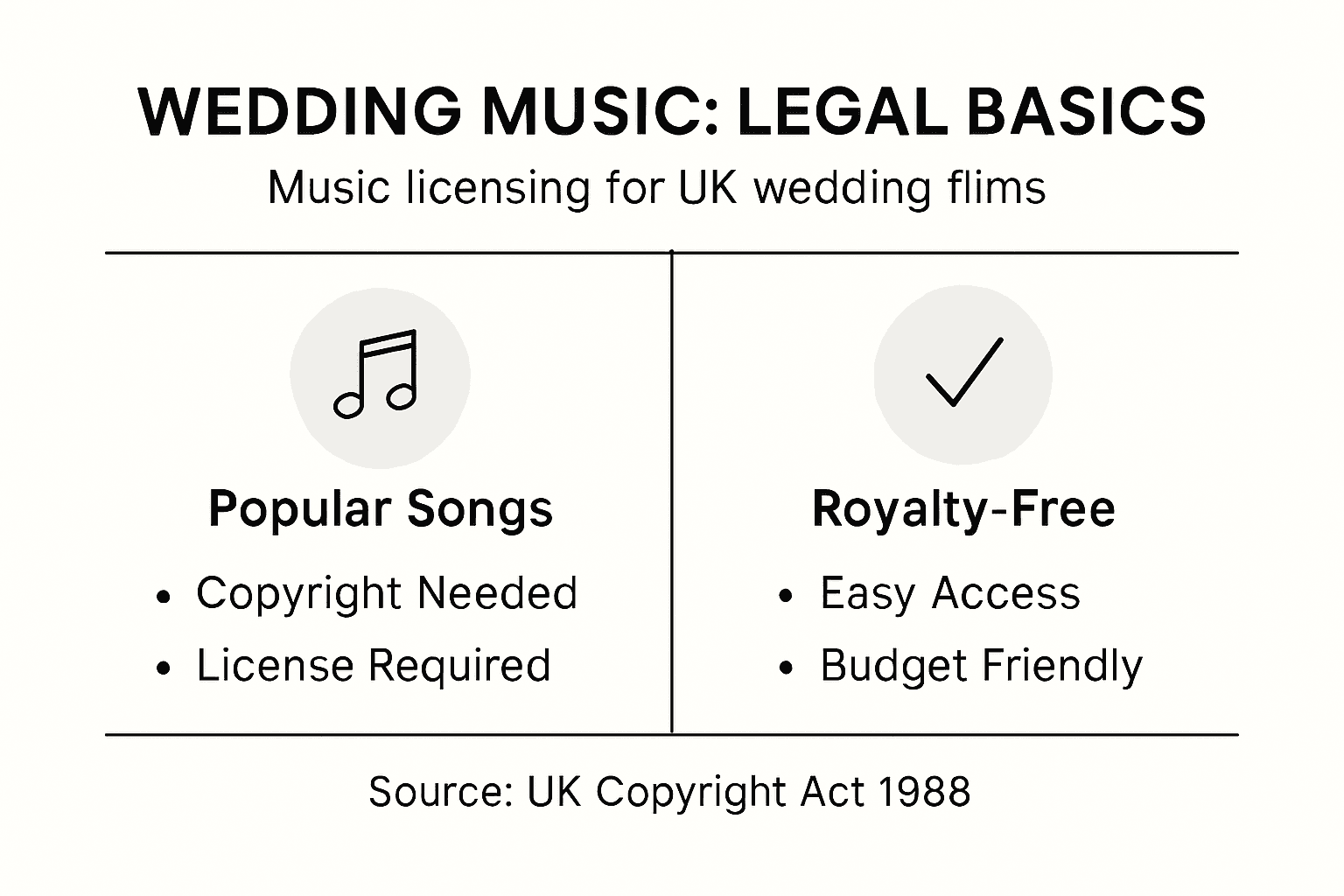
This is where your videographer becomes invaluable. Professional editors understand licensing requirements and often have access to royalty-free music libraries that offer excellent quality without legal complications. Wedding video editing involves carefully selecting licensed music that enhances emotional storytelling whilst respecting copyright law.
Your videographer should discuss music licensing upfront. Ask whether your package includes rights to use your selected songs or if you need to secure licences independently.
The perfect soundtrack feels invisible—viewers should forget they’re hearing music and simply feel the emotions it creates.
Consider also creating a mood board with your videographer. Share songs, artists, and styles you love. This gives them direction without dictating specific tracks, leaving room for their creative expertise.
Timing matters too. Music selection typically happens after filming, when your videographer understands exactly what footage needs scoring. Discussing preferences beforehand sets the tone; finalising choices comes later.
Don’t overthink this. Your videographer has edited countless weddings and understands which music works universally versus what might feel dated in five years.
Pro tip: Create a playlist of 10-15 songs or artists you love and share it with your videographer early—this gives them creative direction whilst preserving their ability to find the perfect pieces that match your actual footage.
Navigating Copyright and Licensing in the UK
Using music in your wedding film isn’t as straightforward as simply selecting your favourite songs. The UK has specific copyright laws that protect musicians, composers, and performers. Understanding these requirements protects you legally and ensures creators are fairly compensated.
UK copyright law is governed primarily by the Copyright, Designs and Patents Act 1988. This legislation protects musical works, sound recordings, and the rights of those who created them. When you use music in your wedding video, you’re potentially using work protected by this law.
Playing recorded music in public settings requires licences from organisations like PPL PRS. Wedding videos shown at receptions or shared publicly fall into this category. Your videographer or you may need to obtain these licences to use copyrighted tracks legally.
Here’s who holds rights to music:
Composers and lyricists who created the original work
Recording artists and producers who performed or engineered the track
Publishing companies that manage rights on creators’ behalf
Rights collection organisations like PRS for Music and PPL
So what does this mean practically? If you want to use a well-known song in your wedding film, someone likely holds the copyright. UK copyright law protects musical works and sound recordings through organisations like PRS or PPL.
Your videographer can navigate this in several ways. Many professionals use royalty-free music libraries—these contain thousands of high-quality tracks specifically licensed for use in videos. You maintain creative control whilst staying legally compliant.
Alternatively, your videographer can apply for necessary licences. This takes time and involves fees, but it allows you to use specific songs you love. Ask your videographer which approach suits your budget and timeline.
Ignoring copyright isn’t just illegal—it’s disrespectful to the musicians and creators whose work makes your film beautiful.
Staffordshire couples sometimes worry this limits their choices. The truth is encouraging: royalty-free libraries contain excellent music across every genre and mood imaginable. Most viewers won’t know the difference.
Have this conversation early. Discuss licensing when booking your videographer, not months after filming finishes. Clear expectations prevent confusion and ensure your final film uses music legally and beautifully.
To help you understand your options, here’s a comparison of licensed vs. royalty-free wedding film music:
Aspect | Licensed Popular Music | Royalty-Free Music |
Legal Requirements | Obtaining rights or licences | Often included with film package |
Choice Limitation | Limited by licensing availability | Wide variety across all genres |
Cost | Usually higher due to fees | Typically more budget-friendly |
Personalisation Level | Fulfils specific song requests | Greater flexibility for mood/tone |
Pro tip: Ask your videographer explicitly whether your package includes licensing for music use, and whether they recommend royalty-free libraries or obtaining specific licences for songs you’ve chosen.
Common Mistakes to Avoid With Music Choices
Even with the best intentions, couples often make music decisions that undermine their film’s emotional impact. Understanding these pitfalls helps you make choices that enhance rather than detract from your wedding story.
The most critical mistake is neglecting copyright compliance. Using copyrighted music without proper licences creates legal exposure and disrespects creators. This isn’t a grey area—it’s avoidable with planning and communication with your videographer.
Choosing music that doesn’t fit the mood of the event can detract from emotional impact. A joyful pop track during solemn vows feels jarring. An orchestral piece during celebration sequences can feel overdramatic. Music must match the moment, not just sound nice in isolation.
Here are mistakes Staffordshire couples commonly make:
Picking songs purely because they’re popular rather than personally meaningful to your relationship
Using music that’s too recognisable and pulls viewers out of the moment thinking of other contexts
Letting the soundtrack overwhelm the visuals, especially during spoken vows or emotional reactions
Choosing music too early before seeing actual footage and pacing
Using too many different songs, creating a disjointed, unfocused feel
Ignoring the audience’s preferences, selecting only experimental or obscure music
Another common error: assuming your favourite songs will work on screen. A track you love listening to might feel completely wrong when paired with your ceremony footage. Context changes everything.
Overusing certain familiar wedding songs creates another problem. If every guest has heard “Canon in D” at dozens of weddings, it loses emotional punch. Overusing popular songs or tracks that dominate the video can overwhelm rather than enhance storytelling.
Timing is crucial too. Some couples pick music months before filming, then feel locked into those choices. Better approach: discuss musical preferences and mood early, but finalise selections after your videographer has edited footage and understands actual pacing and narrative flow.
The most moving wedding films use music as a supporting character, not the star of the show.
Trust your videographer’s expertise here. They understand what works cinematically versus what sounds good on a playlist. They’ve seen which music choices age well and which feel dated within a year.
Finally, don’t assume more music is better. Strategic silence or natural sound (your vows, laughter, ambient noise) creates contrast that makes musical moments land harder.
Pro tip: During your initial consultation, share three films you love and discuss what specific music choices worked for you—this guides your videographer without prescribing exact tracks and helps avoid mistakes before they happen.
Elevate Your Wedding Film with the Perfect Musical Storytelling
Choosing the right music for your wedding video is one of the most powerful ways to capture and enhance the genuine emotions of your special day. At https://www.weddingfilmphotography.com/, we understand the challenge of blending authentic moments with a soundtrack that creates an emotional journey unique to your love story. Our expert videography team specialises in documentary-style filmmaking that uses personalised, carefully selected music to set the tone, guide viewer emotions, and elevate every scene.
Don’t settle for a wedding film that feels disconnected or lacks emotional depth. Discover our approach to cinematic storytelling and how the perfect soundtrack can transform your memories. Explore our detailed information on packages and consult with our professionals to ensure your film’s soundtrack is authentic and legally licensed. Start your journey towards a truly unforgettable wedding film by visiting our website or learn more about how we create emotional wedding films by checking our storytelling approach. Ready to capture your love story with music that resonates authentically? Contact us today to begin planning your personalised wedding film experience.
Frequently Asked Questions
What role does music play in wedding videos?
Music serves as an emotional anchor in wedding videos, enhancing storytelling by setting the emotional tone for various moments, guiding viewer emotions, and creating continuity between scenes.
How can I choose the right music for my wedding video?
Consider the emotional journey you want your film to convey. Think about the tempo, instrumentation, and whether you prefer vocal or instrumental tracks. Sharing a playlist of your favourite songs with your videographer can also help guide their selection.
What are the legal considerations for using music in wedding videos?
Music in wedding videos is protected by copyright law. You may need to obtain licenses for popular songs or opt for royalty-free music that doesn’t require licensing. Your videographer should be knowledgeable about these requirements and can assist you in selecting legal options.
How does music impact the emotional storytelling in wedding films?
Music actively shapes the emotional arc of wedding films by building anticipation, deepening intimacy, elevating joy during celebrations, and guiding reflection at the film’s conclusion. The right soundtrack can enhance the viewer’s emotional experience far beyond visuals alone.
Recommended


Comments